Which Form of Creatine Is Right for You? Powder, Capsules or Gummies

The short answer
- Choose creatine monohydrate. It's the most studied form, about 99% of it is absorbed, and no other form has been shown to raise muscle creatine more.
- Powder, capsules and gummies can all contain the same monohydrate. The format changes the price, the routine and how many pieces you take, not how the creatine works.
- Aim for 3–5 g of creatine a day, then pick the format you'll actually take every day.
What creatine does, in brief
Creatine is a natural compound your body makes from amino acids and also gets from meat and fish. About 95% of it is stored in your muscles, where it helps rebuild ATP, the molecule your cells use for energy, during short, hard efforts like a heavy set or a sprint. Supplements top up those stores, which lets you do a little more work in each set; over weeks of training, that adds up. For the full research picture, read Creatine Monohydrate Benefits: What the Research Shows.
Creatine monohydrate vs HCl and other forms
Shelves and search results are full of creatine forms: monohydrate, HCl (hydrochloride), buffered, ethyl ester, nitrate and more. Here's what research reviews say.
Monohydrate is the benchmark. It's the most commonly studied form in the research literature, and the ISSN's dosing advice is built on it. About 99% of the creatine monohydrate you swallow is absorbed into the blood, then taken up by muscle or excreted in urine.
Other forms haven't beaten it. The 2021 review found no peer-reviewed studies showing that equal amounts of creatine salts, effervescent creatine, creatine ethyl ester, buffered creatine, creatine nitrate or creatine dipeptides raise muscle creatine more than monohydrate. Most studies found these forms had less effect on muscle creatine or performance, and any performance differences had more to do with the other nutrients they were combined with. One reason is simple: these forms contain less creatine per gram than monohydrate.
"Dissolves better" is not "works better." Creatine HCl is a salt form, usually marketed on solubility: it mixes into water more easily, so smaller doses are claimed. The 2021 review addresses exactly this: some forms may be more soluble in fluid, but the evidence "clearly shows creatine monohydrate to be the optimal choice."
Micro-doses don't add up. Some drinks and "serums" contain tiny amounts of creatine, such as 25–50 mg. The research dose is 3–5 g a day, which is 60 to 200 times more.
What about "micronized"? Micronized creatine is creatine monohydrate milled into finer particles. It's still monohydrate.
The practical rule: whatever the format, look for "creatine monohydrate" with an amount in grams on the Supplement Facts panel.
Powder vs capsules vs gummies
All three formats can contain the same creatine monohydrate. Here's how they compare day to day, based on product labels we checked in October 2026.
| Powder | Capsules | Gummies | |
|---|---|---|---|
| Creatine per unit | usually 5 g per scoop | about 0.7–1.25 g per capsule | about 1–2 g per gummy |
| For 3–5 g a day | up to one scoop | about 3–7 capsules | about 2–5 gummies |
| How you take it | measure and mix into a drink | swallow with water | chew; no water, no mixing |
| Cost per gram of creatine | usually lowest | usually more than powder | usually highest |
Powder is usually the cheapest way to buy creatine per gram, and you can set your dose exactly. The catch is the routine: measuring, mixing and remembering, every day.
Capsules take away the mixing and the taste, but each one holds only about a gram, so a full dose means swallowing several.
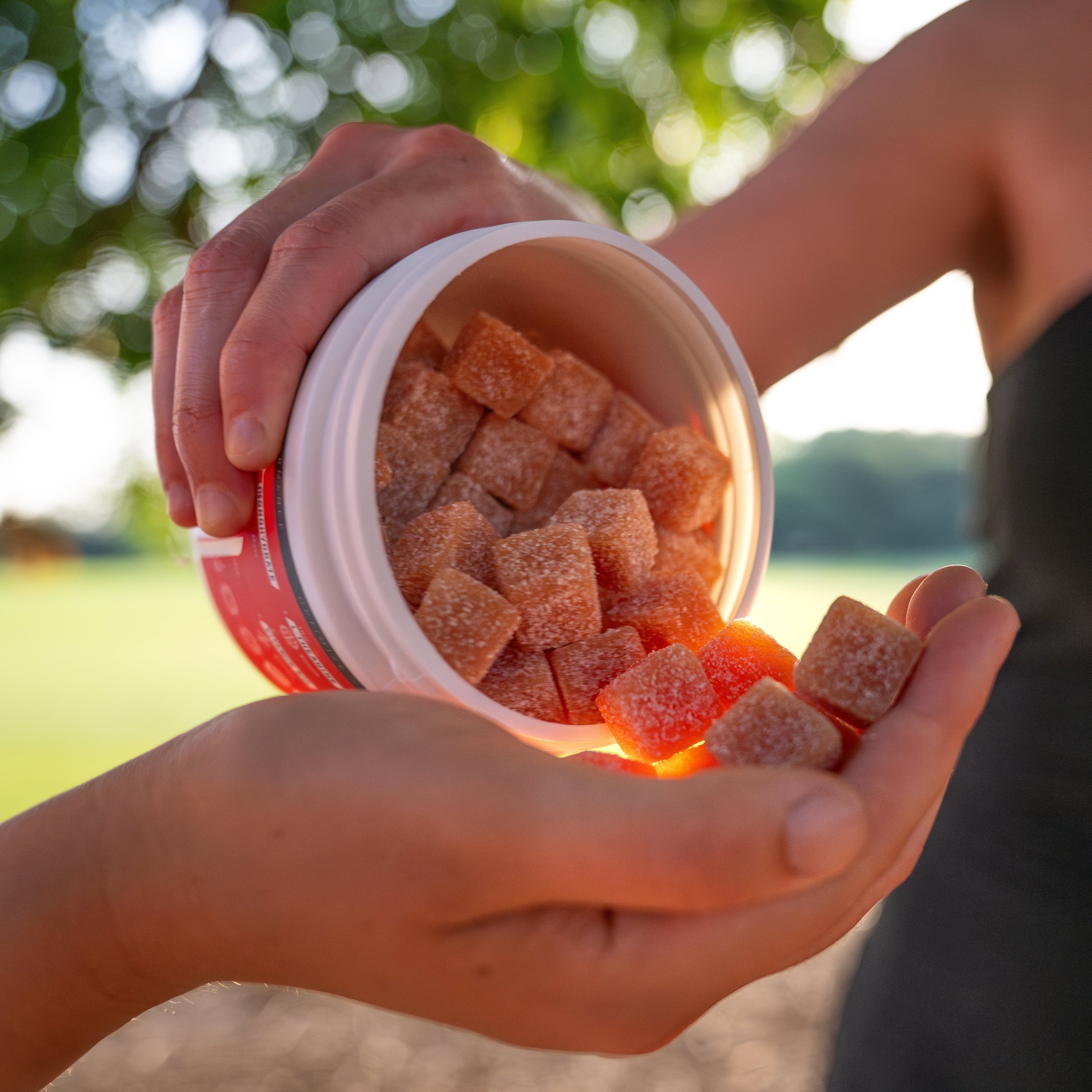
Gummies are the easiest to take anywhere: no water, no shaker, nothing to measure. You pay more per gram for that, and gummies vary, so check two lines on the label: grams of creatine per gummy, and sugar. Some gummies carry several grams of sugar per serving; others are sugar-free.
Which is right for you? If the lowest price per gram matters most, powder wins. But if you've bought powder before and stopped using it, the cheaper tub isn't saving you anything. The 2024 follow-up review found that taking creatine consistently matters more than when you take it. By the same logic, the right format is the one you'll take every day.
Pick by situation
- Lowest cost per gram: powder.
- No taste, no mixing: capsules, if you don't mind swallowing several.
- Easiest to take anywhere, no water needed: gummies. Check the grams per gummy and the sugar.
- Tried powder and stopped: the format you'll actually take every day.
Cost per day: the number to compare
Jar and tub prices hide the dose. Divide the price by the number of days it lasts at your dose.
Example: ATPerform at 3 gummies (3 g) a day (prices as of October 2026)
- 1 jar: $39.99 ÷ 30 days = $1.33 a day
- 2-jar pack: $74.99 ÷ 60 days = $1.25 a day
- 3-jar pack: $99.99 ÷ 90 days = $1.11 a day
At 5 gummies (5 g) a day, a jar lasts 18 days.
How to fit gummies into your routine
- Tie it to something you already do: breakfast, your pre-workout routine or your post-workout snack. The 2024 follow-up review found creatine before or after training works about equally well, so pick the moment you won't forget.
- Take it on rest days too. The goal is full stores, not a dose timed to a workout.
- Have it with food when you can. Creatine taken with carbohydrate, or carbohydrate and protein, has been reported to be retained more consistently.
- Skip loading. At 1 g per gummy, a loading phase would mean about 20 gummies a day. A steady 3–5 g a day reaches similar muscle stores in about four weeks.
- Count all your creatine. If your pre-workout already contains creatine, count it toward your daily 3–5 g. More in Can You Take Pre-Workout With Creatine?
Choosing a gummy? Check the label first
Our guide How to Choose a Creatine Gummy walks through six label checks: the daily dose, the serving math, the form of creatine, sugar, price per day, and whether you'll take it every day.
Quick answers
Is creatine HCl better than creatine monohydrate?
Research hasn't shown that. The 2021 review found no peer-reviewed studies showing that other forms, such as creatine salts, buffered creatine or creatine ethyl ester, raise muscle creatine more than equal amounts of monohydrate, and it concluded monohydrate is "the optimal choice." HCl dissolves more easily in water, but that isn't the same as more creatine in your muscles.
Do creatine gummies work as well as powder?
For the creatine itself, yes, if the gummy contains creatine monohydrate and gives you a real daily dose of 3–5 g. The differences are practical: powder usually costs less per gram, and gummies are easier to take consistently. Check the grams per gummy on the label.
How many gummies equal a scoop of powder?
A typical scoop holds 5 g. At 1 g per gummy, that's 5 gummies; at 2 g per gummy, about 2–3. ATPerform has 1 g per gummy, so 3–5 gummies give you 3–5 g.
Can I switch between powder and gummies?
If both are creatine monohydrate, yes. What matters is your total daily amount, so count every source, including any pre-workout that contains creatine, toward 3–5 g.
ATPerform at a glance
- Creatine monohydrate, 3 g per 3 gummies (strength): 1 g per gummy
- L-theanine, 100 mg (focus)
- Vitamin B12 as methylcobalamin, 3 mcg (energy)
- Black currant powder, 400 mg (recovery)
- 0 g sugar and 25 calories per serving; sweetened with maltitol, allulose and monk fruit
- Vegan, tropical flavor, 90 gummies (30 servings) per jar
- Suggested use: 3–5 gummies a day, before or after a workout
Shop ATPerform Creatine Gummies
Sources
- Kreider RB, Kalman DS, Antonio J, et al. International Society of Sports Nutrition position stand: safety and efficacy of creatine supplementation in exercise, sport, and medicine. J Int Soc Sports Nutr. 2017;14:18.
- Antonio J, Candow DG, Forbes SC, et al. Common questions and misconceptions about creatine supplementation: what does the scientific evidence really show? J Int Soc Sports Nutr. 2021;18:13.
- Antonio J, Brown AF, Candow DG, et al. Part II. Common questions and misconceptions about creatine supplementation: what does the scientific evidence really show? J Int Soc Sports Nutr. 2025;22(1):2441760.